116 editions, 116 winners – and a wealth of stories. GalopSport has trawled through the complete statistics from 1910 to 2025 and brought out the records, the dynasties and the quirky details, before the field jumps off for the 2026 edition of Bucherer Dansk Derby on 1 August.
When the start goes for Bucherer Dansk Derby 2026, it happens for the 117th time.
Since Klampenborg – the horse, not the racecourse itself – won the first edition in 1910, the race has been run every single year without interruption – through two world wars – and has crowned 116 winners over the classic 2,400 metres.
But how well do you actually know the history of the race? Here are all the statistics – and the stories behind the numbers.
The owners: Nobody has won four times
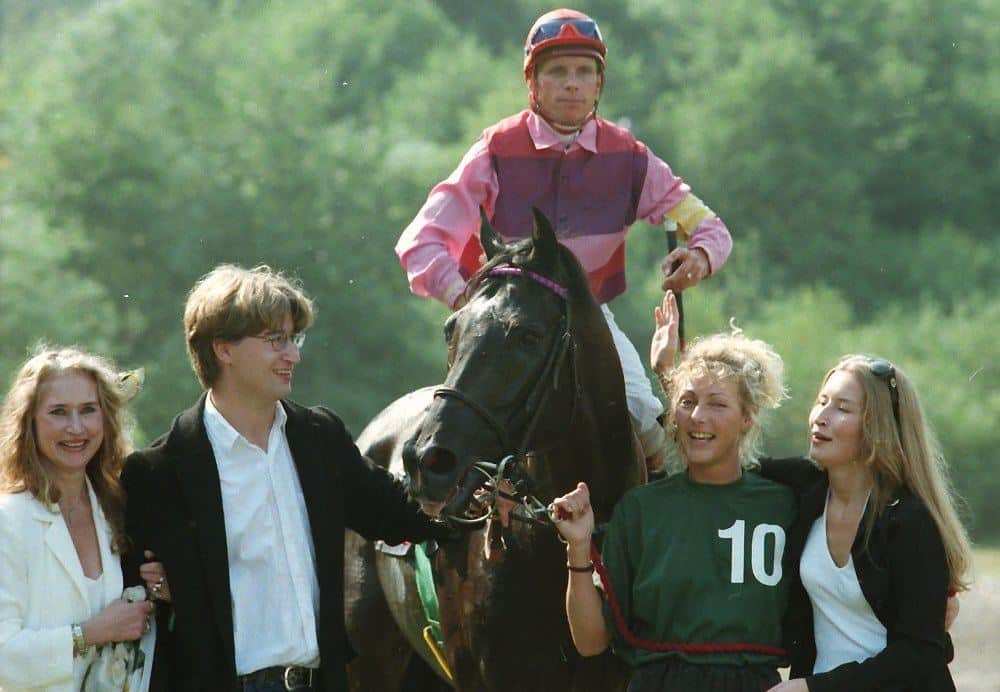
Four owners share the record with three Derby victories – and together the four of them tell almost the whole history of the race.
Carl Moresco took possession of the record already in the race’s youth, the Strecker Brothers took 24 years to collect their three, and in modern times Mme Fernande (Karin Salling) and the Norwegian Stall Trick Or Treat (Morten Myhre) have joined the club – the latter as recently as last year, twenty years after their first victory with Mission Possible.

The families are hidden in the list: Detlef Jürgensen is recorded with two victories, but Mrs Detlef Jürgensen won with Skymaster in 1948 – three Derby victories in the same household, and Skymaster was bred by Detlef himself.
Stig Møller was a co-owner of Cavallo (1936) and sole owner of Sunbeam (1939), and Ejler Rasmussen won in 1984 with Fabulous, before Bo Ejler Rasmussen won in 1987 with the half-sister Farandole – both bred by Ejler Rasmussen.
The trainers: Waugh, Thorngren – and Niels Petersen in pursuit
The trainer statistics are dominated by two men from the race’s first half-century.
The Englishman Percy Waugh reached 13 victories between 1910 and 1947 – he trained the winner of the very first three editions – and the Swede Axel Thorngren answered back with 11 victories spread over four decades.
Among those currently active, Niels Petersen is the man everyone is chasing: six victories since 2013, most recently with Grab The Moment in 2025, make him the most winning trainer of modern times – and with one more victory he moves alone into third place in history, where only the interwar giants Thorngren and Waugh are ahead.

The training dynasties: Add the families together and the numbers become wild.
The Waugh family (Percy 13 + Willy 3) accounts for 16 victories, and the Arnull family (E.F. 6, Willy 4 and Ernst E. 1) for 11.
And note Margareta Cronhielm, who with Tramontana in 1953 became the first female winning trainer – since then have followed, among others, Cathrine Erichsen (3 victories), Hanne Bechmann, Caroline Strömberg and Jessica Long.
The breeders: Hjortebo has taken over the throne
The story of Danish thoroughbred breeding can be read directly in the breeder statistics.
In the interwar years and the 1940s, Dansk Fuldblodsstutteri was the country’s engine room with six Derby winners in 15 years.
Today the power factor is called Stutteri Hjortebo, who with Brigadiers victory in 2024 reached seven winners since 1990 – and thereby crept past the old record holder.

The jockeys: Three men with four – and one with five
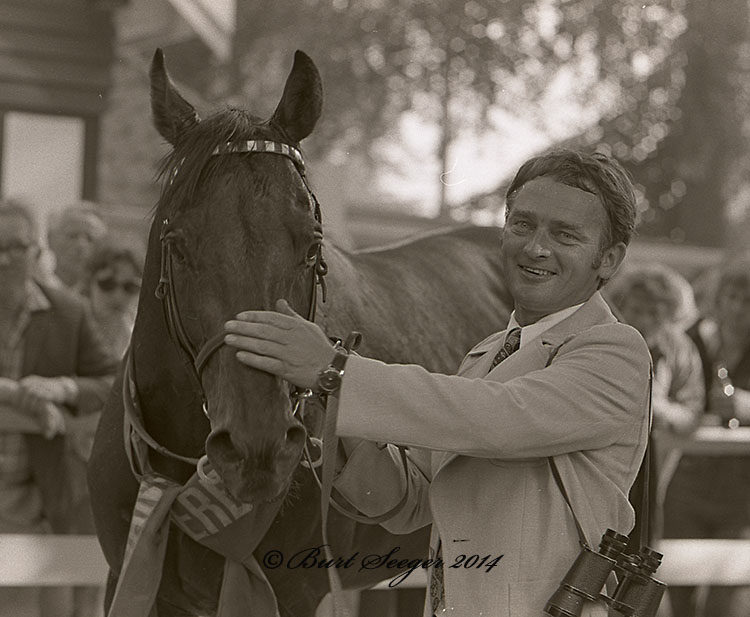
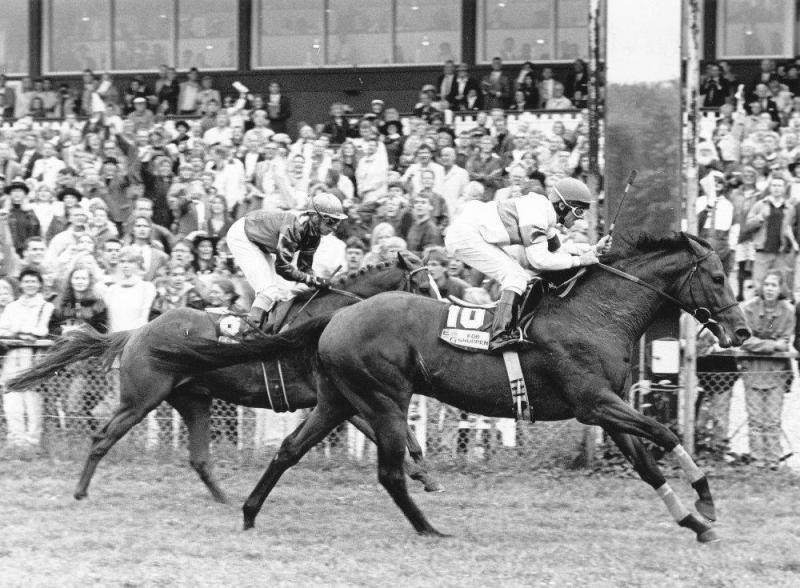
Only one rider has won Dansk Derby five times: Ole Larsen, who between 1975 and 1987 rode home five winners – and whom I shall return to, because his statistics are even more impressive than they look.
Three men stand with four victories, and among them Carlos Lopez is the only active one: with the victories on Master Bloom, Iron Butterfly, Slava Ukraini and Grab The Moment he has won four of the last eight editions – with a big chance of equalling Ole Larsen’s record this year.

The Klimscha dynasty: Albert Klimscha won four times 1949–53, J. Klimscha won in 1955, and Albert Klimscha jr. was in the saddle on Pan in 1964 – six Derby victories to one family.
The Stott name also recurs: Ken Stott won in 1972 and 1982, Nicolaj Stott in 2011 and 2017, and Marc Stott trained Queen Rouge to victory in 2019.
Mark Larsen, who is the son of Ole Larsen, won in 2000 with Vetrotex and in 2014 with Sibelius.
Chris Cordrey, who won the Derby in 1971 and 1979, is the father of Nicholas Cordrey, who in 2001 – 30 years after his father’s first Derby victory – triumphed himself with Cut Champion.
The dual roles: When the trainer was in the saddle himself
Eight times the same person has been recorded as both trainer and jockey on a Derby winner.
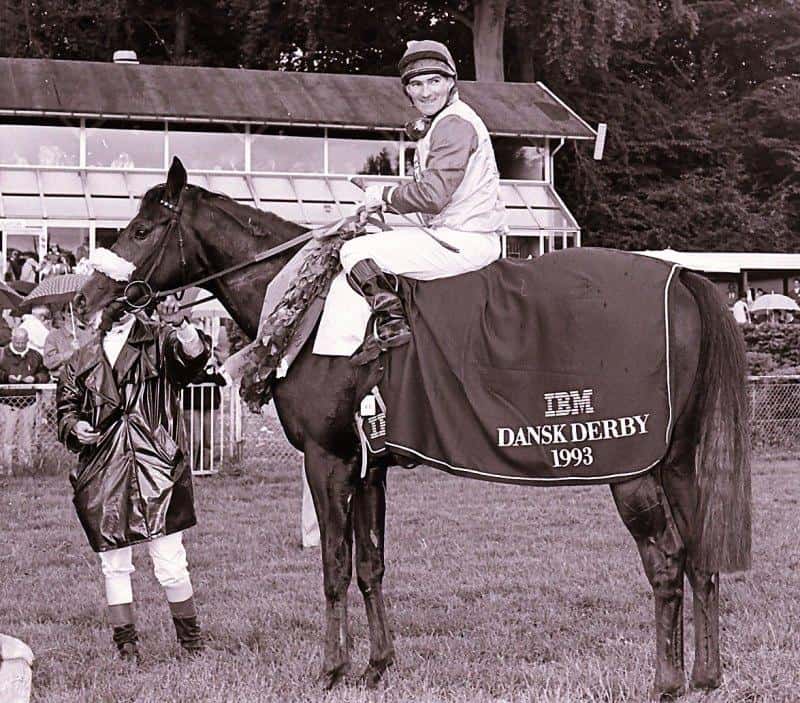
F. Shurgold did it two years in a row with Zeitun (1925) and Martinette (1926), and then followed Hans Bech Holm (Tinto, 1962), W.N. Guest (Four Socks, 1969), Brian Wilson (Mongolian Knight, 1993) – and of course the master Ole Larsen, who with Chinatown (1981), Russian (1985) and Farandole (1987) won as trainer and jockey three times.
Ole Larsen was thus involved in seven Derby victories in 13 years. Hans Bech Holm achieved two victories as a jockey in 1946–47, and 15 years later he won as both trainer and jockey on Tinto.
It is not so strange that Ole was given the nickname “Derby Larsen”.
The bloodlines: The sires, the dams – and the four “royals”
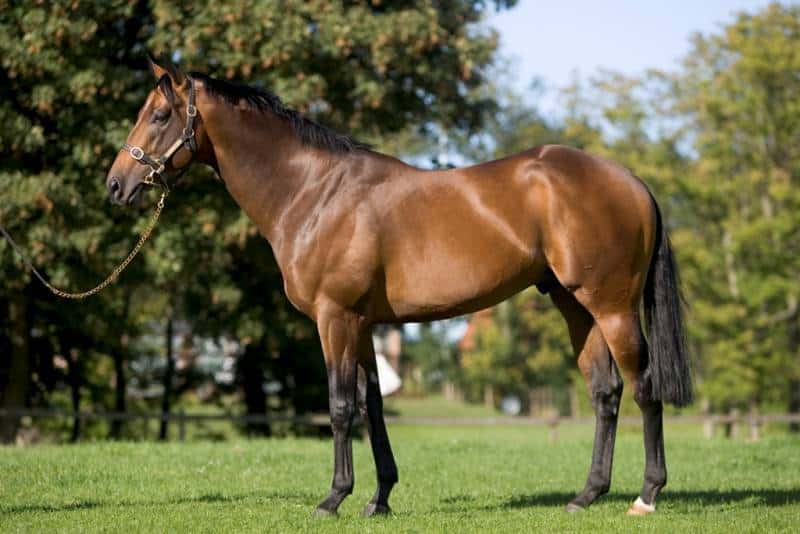
The stallion Gunnel never won the Derby himself, but no sire comes near his five Derby winners in 11 years in the 1930s and 40s.
In modern times Academy Award (three winners in four years, 2008–11) and most recently Moohaajim (two in a row, 2023–24) have worn the crown.

On the dams’ side one mare is in a class of her own. Skip became the dam of three Derby winners in just five years – Dronning Wilhelmina (1919), Lady Skip (1921) and Danish Princess (1923).
And as if that were not enough, Skip’s daughter Dronning Wilhelmina herself became the dam of Carlsminde, the Derby winner of 1928.

Four Derby victories in two generations from one mare: Derby winners who bred Derby winners
Only four times has a winner of the race later produced offspring who also won. Dronning Wilhelmina (1919) became the dam of Carlsminde (1928), Jean de France (1922) became the sire of C.L.O.C. (1930), Far West (1950) became the sire of Far Bell (1967), and Soames (1970) became the sire of Topline (1980).
Since then it has not happened – a 45-year drought among the sires, which does not look like being changed in the immediate future either, in that at present there are no Danish Derby winners standing as active stallions.
The full brothers
Twice, brothers by the same parents have both won: Clap Auster (1915) and Clapham Boy (1916) won two years in a row, while Vallø (1924) and Valhalla (1931) – both by Minsterley out of Valona, both bred by Count A. Moltke and trained by Jens Carlsen – took their victories seven years apart.
And on the maternal grandsire side Elopement is supreme with four winners in nine years (1979–87).
The horses: The records and the quirky numbers
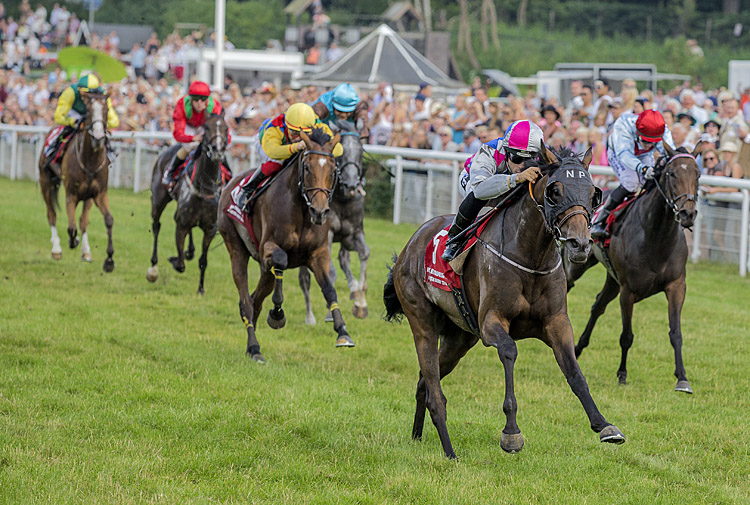
Fastest winner: Davicii, 2.26.1 (2014). The year after, Manacor ran 2.26.6 – the two fastest Derbies ever were thus run two years in a row. Iron Butterfly (2.27.0 in 2021) is third.
Slowest winner: Lille Claus, 3.01.2 (1911) – the only Derby ever won in a time of over three minutes.
Biggest field: 26 runners, when Pan won in 1964 – the 1960s were the Derby’s heyday with 18.3 runners on average. The smallest field was six horses behind Marquette in 1912.
Today the maximum number of runners is regulated to 15, and in the 2026 edition of the Derby 11 will line up, which is the lowest number since the aforementioned Skymaster won in 1948.
Back then it was likewise in a field of 11 horses, while we have to go back to 1945 to find a smaller field, when Asa Thor won ahead of eight rivals.
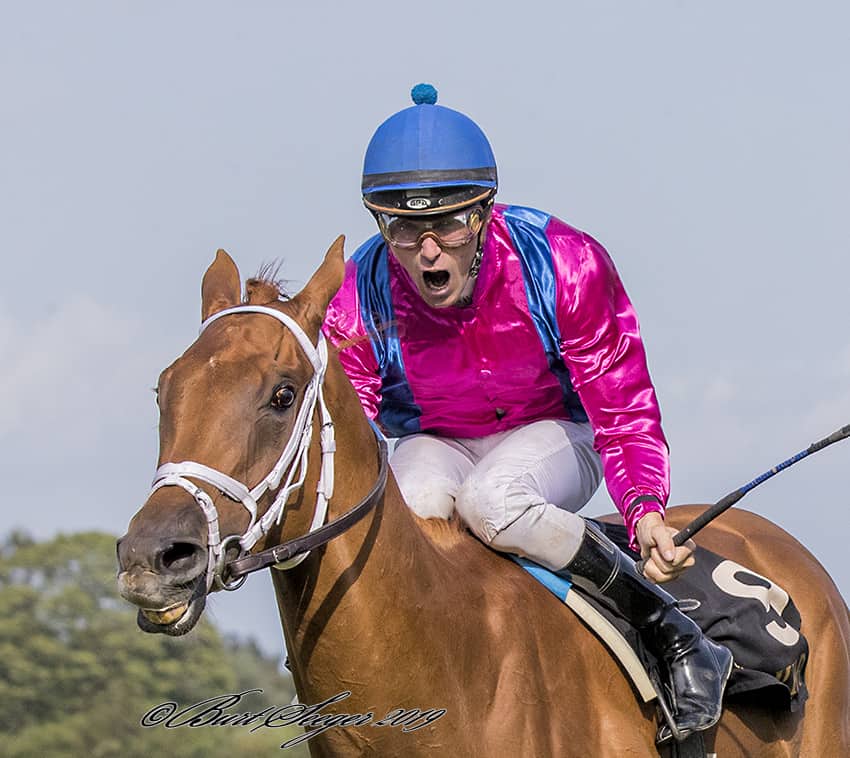
The fillies and mares: 21 of the 116 winners have been fillies or mares – and they have come in clusters. Eleven won in the period 1912–1947, and then 36 years passed before Rossard won for the fillies again in 1983.
Most recently Queen Rouge (2019), Iron Butterfly (2021) and Titannia (2022) have delivered three victories for the fillies in just four years.
The geldings: The Derby was only opened to geldings in 1982 – and a gelding, Mac Ewen, won immediately that same year. In all, 11 geldings have won, eight of them in the period 2001–2014.
The countries of birth: 80 winners were born in Denmark and 24 in Sweden, while Great Britain (5), Ireland (3), the USA (2), France (1) and Germany (1) share the rest.
All three of the first winners 1910–12 were British-bred – and with Federico and Palatal, US-bred horses won two years in a row in 1995–96.
The records that are in play at Klampenborg this year
116 editions have given us a mare with three winning offspring, a trainer with 13 victories, a jockey who twice rode a horse he trained himself to victory, and a racecourse that bred its own first winner – who was, note, owned by the founder of the course.
Now chapter 117 awaits.
Carlos Lopez can, with victory number five, equal Ole Larsen’s jockey record.
Niels Petersen can, with his seventh training victory, move alone into third place in history – with only Thorngren (11) and Waugh (13) ahead of him.
Karin Salling can become the most winning owner with four Derby victories.
And there is a real chance that Queen Rouge can become the first Derby-winning mare in 98 years to become the dam of a Derby winner at Klampenborg herself.
All four things come true if Lord Of The Moon wins the 2026 edition of Bucherer Dansk Derby.