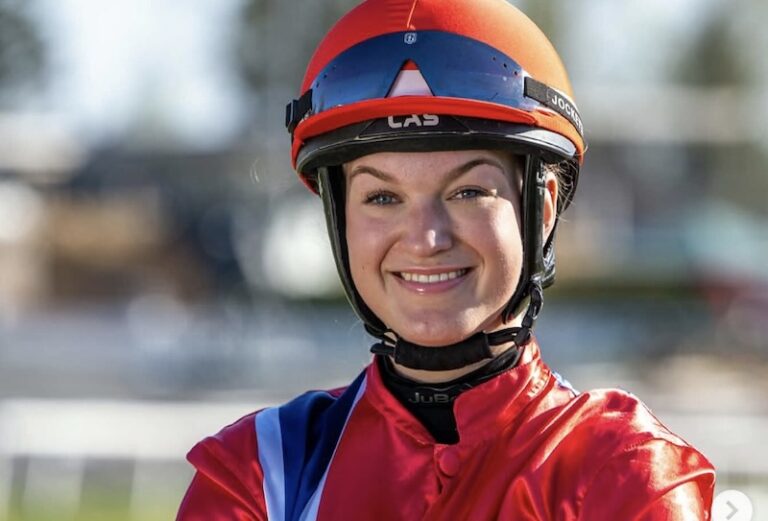
The blue colours of Stald Ras are seen in the winner’s circle more and more often. 2016 has been a good year for the stable. That is why it caused a stir when the stable left Bettina Andersen’s training establishment. Cai Rasmussen, the owner of Stald Ras, and his family are big investors in racing. Cai can afford it. Carl Ras is a successful company. Personally he struggles with trouble in his legs. It has come to two operations, on a knee and a hip, and more are on the way. But things are improving.

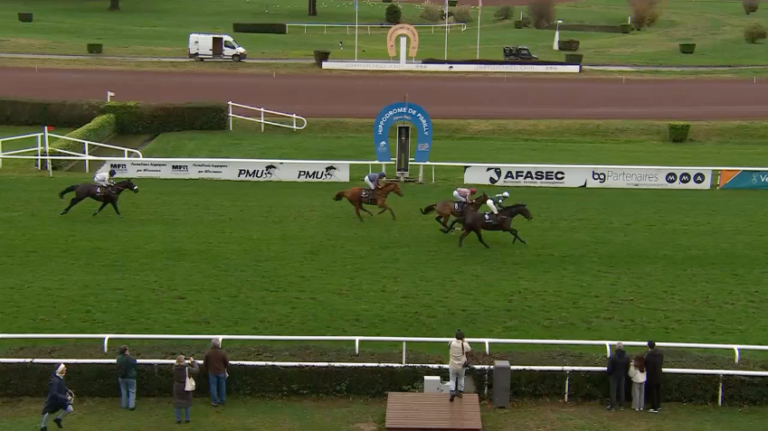
“It is the two Carlras horses who are going best, but Seatown is still there. Who is going to win Vinterfavoritternes Ærespræmie? It is Daurehøj Carlras who still has more to give, with Screwbox Carlras closest to him. But it is Daurehøj Carlras who wins, and he does it ahead of Screwbox Carlras.”
Klampenborg Galopbane, 15 October 2016.
“It is Screwbox Carlras. Then comes Sømkongen Carlras with enormous strides out in the track. It is number seven, Sømkongen Carlras, who does it.”
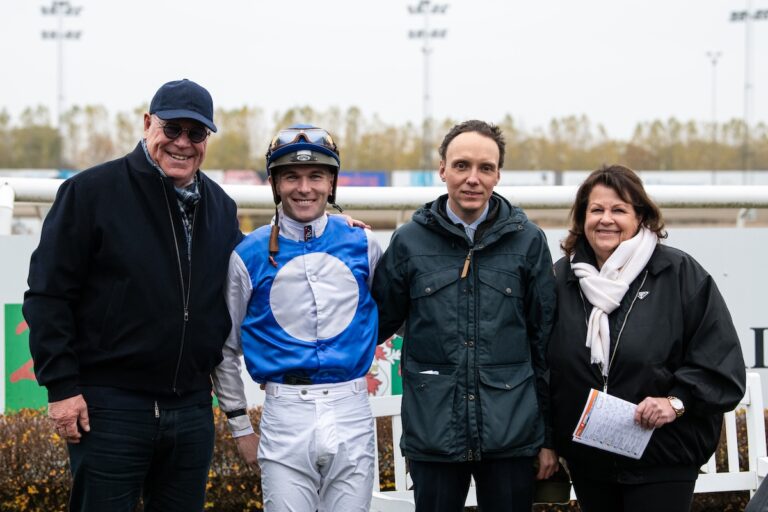
Two weeks earlier, Saturday 1 October 2016 at Klampenborg Galopbane. Stald Ras is celebrating a one-two in the Danish Criterium. Bolette hurries down to receive the pair in the winner’s circle. Karen-Margrete, for once, is not at the races. She is abroad. On the other hand her son Gorm is quite exceptionally at the racecourse.
Cai Rasmussen stays in the box. He always does. He is proud. Of his horses, of course. But he is even prouder of his daughter, Bolette, who runs a business on Jægersborg Allé. And of her mother, Karen-Margrete, Cai’s wife.
He gladly leaves the limelight to them. That is not where he feels at home. He also thinks they are more presentable than he is. We do not contradict him. Nor does he want to be interviewed. It has taken a whole season to convince him, but then he gave in. Because he knows that we, like him, love racehorses.
We are invited to an interview at Hambros Allé. Cai welcomes us. He had a new hip fitted recently, but he is fit for fight. Karen-Margrete comes along later with coffee and cakes, and she joins the discussion from time to time. We are pleased about that. An interest in racehorses is something Karen-Margrete and Cai share.
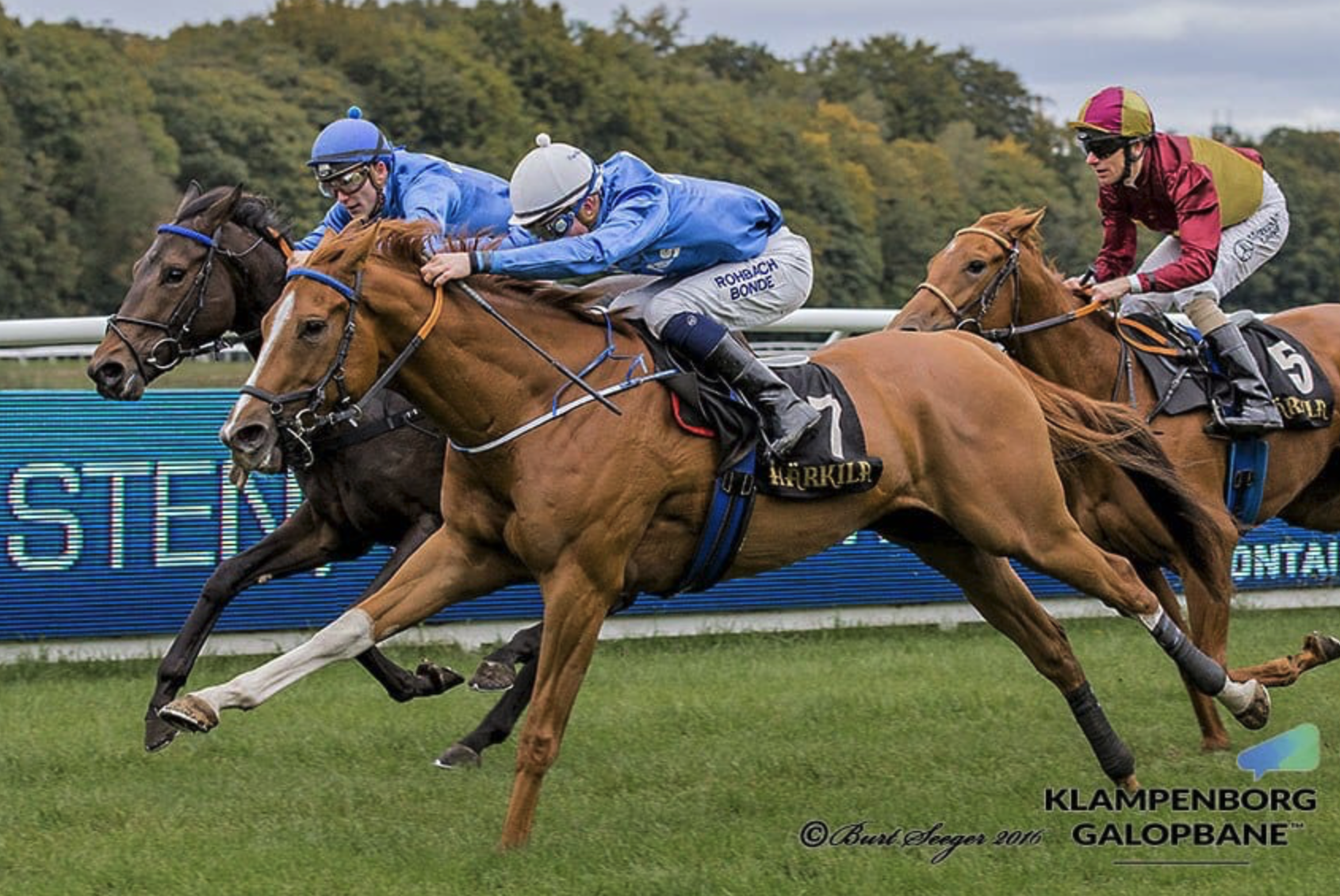
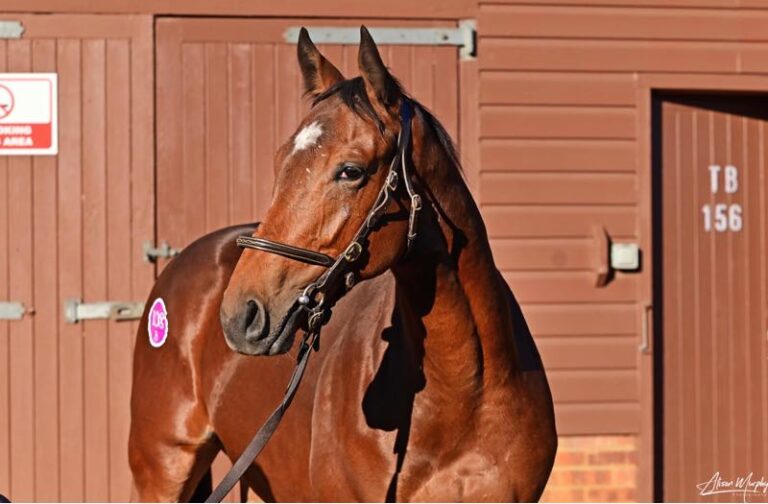
Right now Stald Ras and Cai are enjoying success. The stable has taken the three biggest two-year-old races – and with three different horses. Screwbox Carlras won Auktionsløbet. Sømkongen Carlras won the Danish Criterium and Daurehøj Carlras Vinterfavoritternes Ærespræmie. It has not been done before. Cai is satisfied, almost delighted, but he keeps his feet on the ground.
Will the success continue next year? Will Stald Ras win the Danish Derby in 2017? Cai does not give a clear answer. Nor is the most important thing for him to win a Derby, but to win plenty of good races – and preferably at Klampenborg. On Derby day this year Fighter Carlras was among the Derby favourites and finished fourth.
The same day Steelgirl Carlras won Larch Ærespræmie. Next year Stald Ras could be represented by four horses in the Danish Derby: Screwbox Carlras, who won Auktionsløbet, the Criterium winner Sømkongen Carlras, Drillbox Carlras, whom Cai fancies, and the as yet unraced Brooklyn Carlras.
Daurehøj Carlras, perhaps the best of them all, is imported and cannot run in the Danish Derby – but then there are other Derbys in Scandinavia.

The back story
Cai is also proud of his son, Gorm. In 2008 Cai stepped back, and the third generation, his son Gorm, took the helm and became managing director of Carl Ras. Cai’s business card has always said ironmonger.
When Carl Rasmussen – Cai Rasmussen’s father – set himself up as an ironmonger at Nørrebrogade 180B in 1932, he was only 26 years old. He had the courage to start a business of his own in spite of the economic depression of the early 1930s.
Carl Rasmussen knew exactly how a business should be run. For him service was the key word. It was about being able to do everything the customers wanted – “the customer at the centre” was the motto.
And he knew his customers inside out. Right from the start it was the numerous tradesmen of Nørrebro he based his business on. A shrewd decision. Building was booming in those years in connection with numerous publicly subsidised housing projects, and that fed through to the tradesmen’s order books.
In 1982 the personally owned firm was converted into a limited company, and Carl Rasmussen sold his business to his son Cai in a hard, cash deal. Today times are different, and the transfer of the ownership of Carl Ras to his son Gorm and his daughter Bolette is more gradual. When Cai took over the firm, he set out to live up to his father’s ideals.
The firm went through a difficult period at the beginning of the 1980s, but Cai got it back on course. He found new niches. He opened up new markets and expanded the business. In 2007 Carl Rasmussen Værktøj & Beslag became Carl Ras, and today thousands of Danes shop at its 14 large wholesale centres all over Denmark.
Cai Rasmussen’s interest in ironmongery is inherited from his father. But the interest in racehorses comes from another member of the family. Cai’s grandfather’s brother, Gorm Rasmussen, was back in the 1920s and 1930s the undisputed leading owner and breeder of racehorses in Denmark.
Gorm Rasmussen had a remarkable career in America, where he founded The National Tea Store. It developed into a business success that very few Danes have experienced. Although he thus lived in America, he never forgot Denmark.
In 1924 he bought Sølyst in Klampenborg for half a million kroner in cash, and he spent a further 2.5 million kroner on restoring it. Every year he and his wife spent several months at Sølyst. He also acquired Egebækgaard in Nærum.
That became the centre of his extensive racing interests. Here his wife and Gorm Rasmussen bred racehorses, who were later stabled at, among other places, the former great training centre Damgaarden.
Cai’s “empire”
Cai has now built up his own “horse empire”, which he enjoys together with Karen-Margrete and Bolette. All of them acquired an interest in horses at an early age.
Cai took his first steps at Klampenborg Galopbane. Karen-Margrete has not ridden in races at Klampenborg Galopbane, but she has trained racehorses on the track and led them round the paddock.
And Bolette has been mad about animals since the day she was born. She was given a horse as a confirmation present, and she spent her youth at the riding school.
Today Stald Ras has nine horses in training at Enghavelyst with Hanne Bechmann and her brother Søren Jensen.
The stable also has three broodmares: Enchanting Muse, who is the dam of Fighter Carlras and Go Win Casino. Tatoosh, an outstanding mare who twice won both the Lanwades Stud Fillies Stakes (L) and the Fawzia Stakes.
And finally this year’s Larch winner Steelgirl Carlras, who has just gone to the paddocks.
Stald Ras is also a part-owner of the stallion Juniper Tree, who stands at York Stutteri. On top of that, several promising yearlings in the family’s ownership are ready to take up the challenge next year.
They include a little sister to Stradivarius and a foal by Reliable Man – Yaliho Bloom, who was bought at the Yearling Sale at York Stutteri this year for 300,000 kroner.
Light at the end of the tunnel
Since Cai and Karen-Margrete returned to racing in 2005 after a long break and, together with Knud Braa Jensen, acquired the highly successful Marron, more and more has been invested in the sport.
“You do get gripped by it”, as Cai puts it. His son Gorm, who does not share the family’s enthusiasm for racing, thinks they spend too much money on racehorses.
“And he is quite right about that”, Cai says – but there is no doubt that Cai thinks it is worth it.
By the end of October this year Stald Ras had won 10 races, including four feature races, and earned a good 850,000 kroner. That is nowhere near covering the costs. Cai is nevertheless satisfied after a couple of lean years. He sees the light at the end of the tunnel, and he looks forward to other and new good experiences in the years to come.
A shared interest in racing
Karen-Margrete and Cai used to go to the ballet and the opera together a great deal. There are still ballet and opera visits, but now racing has come to the top of the agenda, and it is an interest they share and one they agree you have to share.
They love Klampenborg Galopbane. The beautiful, idyllic surroundings, the historic grandstands, the fine racing – and the social side of it that they have at the racecourse today with close friends such as Carsten Nørgaard and the Elsass and Velin families.
They also have joint ownership interests with them in various contexts, even though Cai insists that he is a loner.
Their daughter Bolette is likewise a regular at Klampenborg Galopbane, often accompanied by the latest generation. The interest in racehorses appears to be hereditary in the Rasmussen family. Cai says he has no advisers when it comes to racehorses. As a businessman he was impulsive when it came to buying new companies.
That is why there were many of them, and not every purchase was a success. That story repeats itself when it comes to racehorses. There is no doubt, though, that Bolette is close – very close – when it comes to the family’s racing interests. She means a great deal. And Søren Jensen is also used occasionally to confirm that the latest finds “can stand on their legs”.
We ask why Stald Ras moved from Bettina Andersen to Enghavelyst this autumn. Cai does not think it serves any purpose to go into detail about that matter.
“It is, after all, every owner’s right to decide who is to train his horses”, and Cai wants to decide for himself.
He is pleased to have his horses gathered at Enghavelyst, and he feels there is a good spirit at Hanne Bechmann’s. He could have chosen to place all his horses with Søren Jensen, but he does not believe it is a good thing if one owner takes up too much space in a training yard.

Flyer brought many joys
Stald Ras has had many good horses, and with the commitment and investment the stable shows, there will hopefully be many more and perhaps even better ones. Marron won Kapplöpningssällskapets Stora Pris in 2008 and the Breeders’ Trophy Stayer the same year.
The following year he won the Klampenborg Classic over 2400 metres ahead of Django after a tight finish. You sense clearly, though, that Karen-Margrete’s and Cai’s favourite horse has been Flyer. He did not run as a two-year-old, and as a three-year-old it came to only a single win, but then things moved quickly. As a four-year-old he won six races, and in the following five years there were ten more.
Flyer was not only Karen-Margrete and Cai’s favourite. He was the crowd’s favourite. How often did you not hear: “This time he is not going to get there”. But he did – very often. He was in the thick of the tight finishes.
And that is the kind of racing Karen-Margrete and Cai like. Excitement to the very end, with many horses crossing the line almost together and a winner by a whisker. What Marron and Flyer have in common, incidentally, is that both of them had almost been given up on as racehorses.
Thanks not least to Bolette they nevertheless developed into performers of the very highest class.
Klampenborg Galopbane comes first
Karen-Margrete and Cai are very fond of Klampenborg Galopbane. No other Scandinavian racecourse can match its charm and setting. That is why they have also noted with pleasure all the improvements that have been made at the track in recent years. Klampenborg Galopbane is beautiful and smart.
Karen-Margrete points out, though, that the improvements have above all benefited the public. That is fine, but it is important to remember that it is a racecourse for horses. The horses’ conditions must be given priority. Track and stabling conditions have to be up to scratch.
For example, the track has to be watered when it is needed, and the starting stalls have to be up to date. When it comes to stabling conditions, there is a great need for improvement too.
Cai stresses that securing a sound economy at Klampenborg Galopbane is a financially difficult task. Their backs are against the wall. He does his bit by giving the management as candid a view as possible of what he thinks is good and what he thinks is bad.
A good life
Karen-Margrete and Cai are hospitable. It is a pleasure to be with them in their beautiful and lovely home. They radiate a wonderful togetherness. They have experienced much together, and they are happy together. It is plain to see. Their expressions show it.
We ask them what has made them most content in their lives – even though we know the answer in advance.
A quick glance is exchanged between husband and wife.
“We live a good life together, and we are happy about and proud of our two children and six grandchildren.”